

Wow! Excellent customer service. I submitted an email query, had a call…
Alison Hurst
You're viewing our UK site. Prices, available medicines and clinicians depend on where you live.
 United KingdomUK care and pricing. Telehealth, pharmacy and NHS services for UK patients.Current
You can change this at any time from this menu.
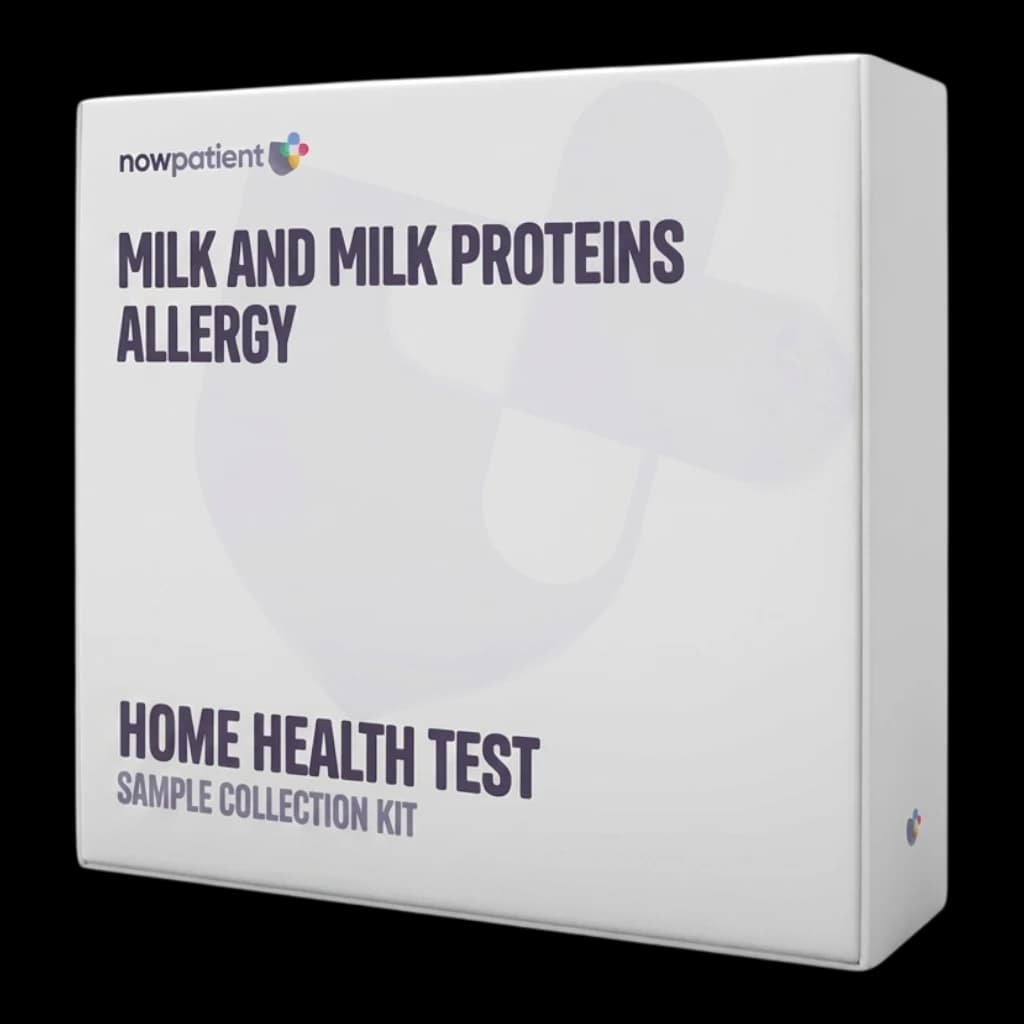
Do you suffer from allergies, which develop quickly after being exposed to specific milk allergens? Our milk and milk proteins test can check if you have an allergy to Alpha-lactalbumin, Beta-lactoglobulin, Casein, Cow’s milk, Goat’s milk, Mare’s milk, Sheep’s milk, or Whey (cow or ewe). Get peace of mind by getting tested today, in the comfort of your own home.
Speak to a certified clinician about your results and the right next steps.
Milk protein allergy is a type of food allergy, testing options include:
If you have delayed-onset cow’s milk allergy or your allergy is linked to eczema, skin and blood tests may not provide clear results. Your doctor or dietitian may need to confirm your diagnosis by monitoring your symptoms and whether they improve after you have stopped eating cow’s milk.
Milk allergy symptoms include:
Testing methods for milk allergy include the skin prick test, blood tests, or an oral food challenge. You may however need to see a healthcare professional for a complete diagnosis.
You should consider the milk allergy test if you have allergy symptoms, such as hives, swelling of your lips or face, bloating, abdominal pain, vomiting, or skin rashes, which develop quickly after being exposed to specific milk allergens.
You can test for milk and milk protein allergies at home using a home test kit or by carrying out a home milk challenge:
Your milk protein allergy test results will be available within two to three working days of receiving your sample at the laboratory.
There are a number of tests that can help diagnose a milk protein allergy, including the skin prick test, blood test, oral food challenge, stool test and elimination diet. You may need to use a combination of these tests to accurately diagnose a milk allergy or an allergist may perform an oral challenge.
A milk allergy is a reaction by the body’s immune system to dairy proteins. Lactose intolerance is not an allergy. It does not involve the immune system. People with lactose intolerance are unable to produce enough lactase to digest sugars in milk products.
Yes, most young children will outgrow a milk protein allergy by the age of 3 to 5 years, but they may need to continue to avoid milk products if they do not outgrow the allergy.
Symptoms suggesting a need for a milk allergy test include hives, an itchy rash, a swollen face, lips, tongue, or throat, wheezing, vomiting, abdominal pain, constipation, diarrhoea and bloody stools after having consumed milk.
If you have a milk protein allergy, you should avoid:
If you are breastfeeding and your baby is showing cow’s milk protein allergy (colic, hives, skin rashes) you should avoid dairy products and cow’s milk for up to 6 weeks.
Consultations, prescriptions, medication delivery, health monitoring – all in one place.
Wow! Excellent customer service. I submitted an email query, had a call…
Alison Hurst
I do not leave reviews, due to time and a rare condition I have. I…
Sherry M
Great experience getting the med. Clinician was very thorough.
Barbara Hill
Cannot speak highly enough of the service and assistance I have…
CJH
Very good experience - the clinician asked intelligent questions about…
Phil Daoust
Really excellent. Very thorough and professional pharmacist who guided…
Colin Glass
We are a broad skilled and passionate group of clinicians with experience of operating in regulated health systems in the United Kingdom & United States. Providing excellent care and advice is at the heart of everything we do.