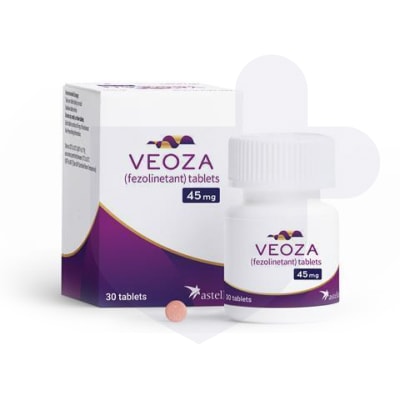
Veoza vs Lynkuet

A Woman reading an article

History
(Current Version)
Medically reviewed byMedically Reviewed by
Navin Khosla, B.Pharm
Medically reviewed byMedically Reviewed by
Navin Khosla, B.Pharm

Veoza vs Lynkuet: What is Elinzanetant?

Lynkuet is the brand name for elinzanetant (brand name Lynkuet), a novel non-hormonal medicine developed by Bayer. It is a small-molecule neurokinin 1 (NK1) and neurokinin 3 (NK3) receptor antagonist — the first and only treatment to target both receptors simultaneously. As a non-hormonal treatment for menopause symptoms, it is prescribed for adults experiencing moderate to severe vasomotor symptoms (VMS), the clinical term for hot flushes and night sweats associated with menopause or caused by adjuvant endocrine therapy for breast cancer.

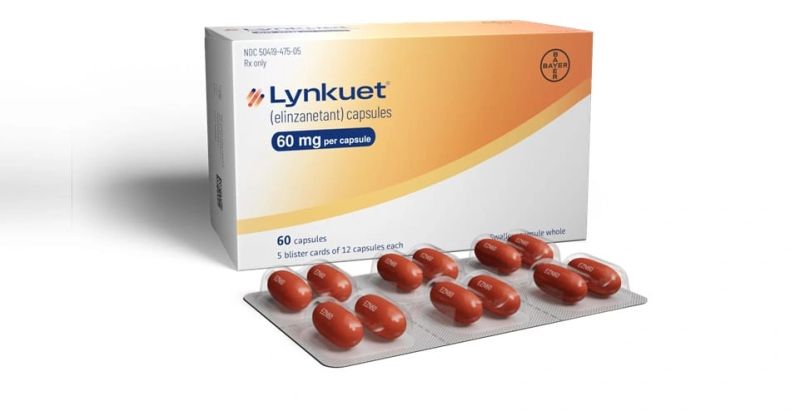
Lynkuet is available as a 60 mg soft capsule taken once daily at bedtime. It is a prescription-only medicine and is currently available on private prescription in the UK and US.

Neurokinin receptor antagonists like Lynkuet work by targeting neurokinin activity in the brain’s thermoregulatory center, which becomes dysregulated during estrogen withdrawal, to help reduce menopause-related vasomotor symptoms.

To learn more about menopause treatments available online, visit the NowPatient Menopause Treatment page.

Lynkuet (Elinzanetant): The New Non-Hormonal Treatment for Menopausal Hot Flushes

Lynkuet (elinzanetant) is a groundbreaking, hormone-free prescription treatment for moderate to severe menopausal hot flushes and night sweats. Developed by Bayer and approved by the MHRA in the UK in July 2025, & FDA in October 2025. It is the world’s first dual neurokinin NK-1 and NK-3 receptor antagonist, offering a new pathway for women who cannot or choose not to take HRT.

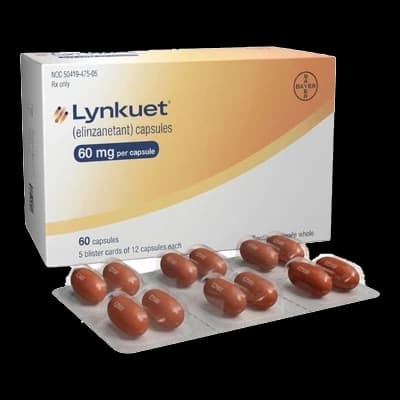
An image depicting a box of Lynkuet and the red Lynkuet capsules

Regulatory Approvals: A Global Milestone for Women’s Health

Lynkuet’s approval journey marks a significant milestone in women’s health. On 10 July 2025, the UK’s Medicines and Healthcare products Regulatory Agency (MHRA) granted the world’s first approval for the drug elinzanetant, making the UK a pioneer in authorising this therapy. Regulatory approvals have since followed rapidly across multiple markets:

  • UK (MHRA): July 2025 — first global approval
  • Australia & Canada: 2025
  • Switzerland: 2025
  • United States (FDA): October 2025
  • European Union (EMA): November 2025

With this approval, approximately half a million women in England are expected to benefit from access to this drug.

The EU approval, covering both menopause-related VMS and VMS caused by adjuvant endocrine therapy (AET) for breast cancer, was based on the full OASIS Phase III clinical programme (OASIS-1, -2, -3, and -4), all of which met their primary and key secondary endpoints.

The Unmet Need: Why This Treatment Matters

Vasomotor symptoms are among the most common and disruptive experiences of menopause. Studies suggest that up to 80% of women experience hot flushes during the menopause transition, and most women will have some degree of vasomotor symptoms. Yet almost two thirds remain untreated. Hot flushes can range from mild to severe, disrupting daily life—including sleep, work, and relationships—affecting mood, reducing productivity, and significantly diminishing quality of life. For some women, symptoms can persist for more than a decade.

While Hormone Replacement Therapy (HRT) remains the gold standard treatment for menopausal symptoms, it is not suitable for every woman. Some women are unable to take HRT due to medical reasons, such as a history of hormone-receptor-positive breast cancer, blood clots, or certain other medical conditions, and are often advised against HRT. Until now, these women had limited effective options. Lynkuet directly addresses this gap.

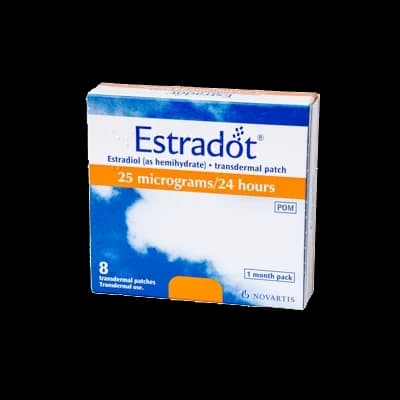
Explore HRT treatment options on NowPatient, including Evorel patches, Evorel Conti, and Estradot patches.

How Does Lynkuet Work? The Science Behind Elinzanetant

To understand why Lynkuet is so innovative, it helps to understand the brain science behind hot flushes. Neurokinin receptors, particularly the neurokinin 3 receptor (NK3), play a key role in the regulation of body temperature and hormone balance. Activation of these receptors can lead to the development of hot flushes and other vasomotor symptoms by influencing neural signals involved in menopause.

The KNDy Neurone Connection

Vasomotor symptoms are driven by the hyperactivity of KNDy neurones (pronounced “candy” neurones) — specialised nerve cells in the hypothalamus, the brain’s temperature regulation centre. KNDy stands for Kisspeptin, Neurokinin B, and Dynorphin — three neurotransmitters that work together to control the body’s thermostat.

During menopause, falling oestrogen levels disrupt the balance between oestrogen and neurokinin B. This causes KNDy neurones to become hyperactive, making the brain’s thermostat over-sensitive to even small temperature changes — triggering hot flushes and night sweats.

A Dual Mechanism of Action

What sets Lynkuet apart from its predecessor Veoza (fezolinetant) is its dual receptor targeting. While fezolinetant blocks only the NK3 receptor, elinzanetant blocks both NK1 and NK3 receptors:

  • NK3 receptor blockade: Directly reduces the hyperactivity of KNDy neurones, decreasing the frequency and severity of hot flushes.
  • NK1 receptor blockade: The NK1 receptor may play a role in the cooling response — including sweating and peripheral vasodilatation — and in sleep disturbances. Blocking it may provide additional benefits for sleep quality.

This dual action may explain why elinzanetant has demonstrated improvements not only in vasomotor symptom frequency but also in sleep disturbance and menopause-related quality of life — outcomes that go beyond what a single-receptor approach can offer.

However, it is important to note that neither elinzanetant nor fezolinetant has been tested directly against hormone replacement therapy (HRT) in head-to-head clinical trials.

Clinical Evidence: The OASIS Trial Programme

Lynkuet’s approval is grounded in one of the most comprehensive clinical development programmes in menopausal medicine — the four-part OASIS Phase III trial series. The safety and efficacy of Lynkuet were established in three trials: OASIS-1, OASIS-2, and OASIS-3. During these clinical studies, certain effects and side effects were observed, providing important data on the drug’s overall profile.

OASIS-1 and OASIS-2

These two global, double-blind, randomised controlled trials enrolled postmenopausal women aged 40 to 65 years experiencing moderate to severe vasomotor symptoms, with elinzanetant approved to treat moderate to severe symptoms. Published in the Journal of the American Medical Association (JAMA) in August 2024, results showed:

  • Elinzanetant produced significant reductions in VMS frequency as early as week 1 of treatment — faster than most alternatives, specifically targeting hot flashes as the primary symptom.
  • By week 4, women taking elinzanetant had, on average, 3.0–3.3 fewer moderate-to-severe hot flushes per day compared with placebo.
  • By week 12, the benefit was maintained with reductions of 3.2 fewer episodes per day versus placebo in both trials.
  • These results demonstrate substantial hot flash relief provided by elinzanetant in clinical trials.
  • Significant improvements in sleep disturbance, menopause-related quality of life, and daily functioning were also reported.

OASIS-3

OASIS-3 was a longer-term trial of 628 postmenopausal women, designed to assess sustained efficacy and safety over 52 weeks. Published in JAMA Internal Medicine in September 2025, it confirmed:

  • At week 12, 74% of women taking elinzanetant experienced a reduction in hot flushes, versus 47% in the placebo group.
  • By week 50, women on elinzanetant experienced on average 1.4 moderate-to-severe vasomotor events per day, compared to 3.5 in the placebo group — a sustained, meaningful difference.
  • Improvements in sleep and quality of life were maintained through week 52.

Safety outcomes included monitoring the risk of adverse events observed during the 52-week trial. Liver function tests were performed regularly to monitor for potential liver-related side effects.

OASIS-4: Evidence for Breast Cancer Patients

OASIS-4, published in the New England Journal of Medicine in June 2025, examined women taking adjuvant endocrine therapy (AET) for hormone receptor-positive breast cancer — a group for whom HRT is contraindicated. Key findings:

  • Elinzanetant significantly reduced the daily frequency of moderate-to-severe vasomotor symptoms caused by endocrine therapy.
  • Women experienced greater reductions in sleep disturbances and improved menopause-related quality of life compared to placebo.
  • The authors noted the need for longer-term follow-up data, particularly regarding breast cancer recurrence — outcomes that were not pre-specified endpoints of this trial.

While Lynkuet is effective for vasomotor symptoms, it may not address other symptoms of menopause, such as mood changes or joint pain.

Based on OASIS-4 data, the EMA’s EU approval in November 2025 specifically includes the indication for VMS caused by adjuvant endocrine therapy for breast cancer — a first for a non-hormonal menopause therapy.

Side Effects and Safety Profile

Lynkuet has a broadly favourable safety profile in clinical trials. The following are the common side effects observed:

  • Fatigue
  • Drowsiness (somnolence) — which is why the capsule is taken at bedtime
  • Headache
  • Diarrhoea
  • Muscle spasms

Regarding liver safety: while some trial participants developed mildly elevated liver enzyme levels, no serious liver injury was reported in studies lasting up to one year. However, liver injury is a potential serious side effect associated with this class of medications. Liver function tests are recommended before and during treatment to monitor for liver injury, and women should discuss this with their prescriber.

As noted by Dr Louise Newson, GP and menopause specialist, elinzanetant (like all neurokinin receptor antagonists) may affect neurokinin receptors in other areas of the body beyond the hypothalamus — including the digestive, cardiovascular, and immune systems, as well as the ovaries. The full implications of this broader receptor blockade have not yet been comprehensively studied in long-term research.

Who Is Lynkuet Suitable For?

Lynkuet is licensed for adults — specifically women aged 40 and over — who experience moderate to severe vasomotor symptoms associated with menopause. As a nonhormonal treatment option, it is particularly relevant for:

  • Women who cannot take HRT due to a history of hormone receptor-positive breast cancer, blood-clotting disorders, or other contraindications
  • Women who are taking endocrine therapy for breast cancer and experiencing treatment-induced hot flushes (EU, Australia, Canada indication)
  • Women who prefer a hormone-free approach for personal or medical reasons
  • Women for whom HRT has been insufficiently effective for vasomotor symptoms alone

Who Should NOT Take Lynkuet?

Lynkuet is not appropriate for:

  • Women who are pregnant or may become pregnant
  • Those with liver problems or severe hepatic impairment
  • Women with a history of seizures
  • Those taking certain medications (check with your prescriber for interactions)
  • Those taking medications containing estradiol, estrogen, or progesterone, as interactions with these hormones have not been studied

It is not recommended to take Lynkuet alongside HRT, as combined use has not been studied. For women suitable for both, clinical guidance should be sought to determine the best individual approach. Read Is HRT Safe? on the NowPatient Blog for a detailed overview of HRT benefits and risks.

Lynkuet vs. Veoza (Fezolinetant): How Do They Compare?

Lynkuet is often discussed alongside Veozah (fezolinetant), the other non-hormonal neurokinin receptor antagonist approved in the UK for menopausal VMS. Both drugs are indicated for women experiencing severe hot flashes associated with menopause, targeting this disruptive and persistent symptom. Here are the key differences:

  • Receptor targeting: Veoza blocks NK3 receptors only; Lynkuet blocks both NK1 and NK3 — the first dual-targeted therapy of its kind.
  • Sleep benefits: Lynkuet has demonstrated more consistent improvements in sleep disturbance in trials, likely due to its NK1 receptor activity.
  • Speed of onset: Studies suggest elinzanetant may produce faster reduction in VMS frequency.
  • Breast cancer use: Lynkuet has the strongest evidence base for women on endocrine therapy for breast cancer (OASIS-4), with EU approval for this indication.
  • Liver monitoring: Fezolinetant requires more stringent liver function monitoring; elevated liver enzymes were more common in fezolinetant trials.

A 2025 systematic review and meta-analysis of 10 controlled trials involving over 4,600 postmenopausal women found that both treatments reduced vasomotor symptoms by 50% or more, with elinzanetant producing faster effects and greater improvements in menopause-specific quality of life.

Lynkuet and Women with a History of Breast Cancer

One of the most significant aspects of Lynkuet’s development is its potential role in treating women who have had hormone receptor-positive breast cancer. This group is often advised against HRT because oestrogen can stimulate breast cancer cell growth. Yet these women frequently experience severe vasomotor symptoms — both from natural menopause and from the endocrine therapies (such as aromatase inhibitors and tamoxifen) used to treat their cancer.

OASIS-4 demonstrated meaningful benefits for these women, leading to EU approval for this specific indication. However, as clinical experts note, the OASIS-4 trial did not pre-specify breast cancer recurrence or survival as endpoints, so longer-term safety data in this population is still evolving. Women with a cancer history considering Lynkuet should have an individualised conversation with their oncologist and menopause specialist.

Dr Louise Newson notes: “A decision to treat women with a past history of cancer should be based on an individualised assessment of the relative risks and benefits. To enable women to make an informed treatment choice, they should be aware that the available safety data is still limited.”

How to Access Lynkuet in the UK

Lynkuet is currently available in the UK on private prescription only. It is not yet available via the NHS. Women seeking Lynkuet should speak with a GP, menopause specialist, or licensed online prescribing service. It is important to consult your doctor to discuss whether Lynkuet is appropriate for your individual needs and to ensure safe and effective treatment.

At NowPatient, you can book a free video consultation with a specialist prescribing clinician who can assess whether Lynkuet or an alternative treatment is right for you. If approved, your treatment is delivered directly to your door. Browse all menopause treatments at NowPatient.

Lynkuet in Context: Is It a Replacement for HRT?

It is important to be clear: Lynkuet is not a replacement for HRT in women for whom HRT is safe and suitable. According to leading menopause specialist Dr Louise Newson, HRT remains the most effective evidence-based treatment for perimenopausal and menopausal symptoms because it targets the underlying cause — declining hormone levels. HRT is also bone-protective, cardioprotective, and neuroprotective, and has been shown to reduce all-cause mortality.

Lynkuet does not treat the full spectrum of menopausal symptoms. It does not address vaginal dryness, mood changes, brain fog, joint pain, or loss of libido. It has not been directly compared against HRT in a head-to-head clinical trial, and there are no long-term data on its effects on cardiovascular health, bone density, or cancer incidence.

What Lynkuet does provide is a clinically meaningful, hormone-free option for women specifically troubled by moderate-to-severe vasomotor symptoms who cannot or do not wish to use HRT. In this role, it represents a genuine advance.

Access Menopause Care with NowPatient

Whether you are looking to explore Lynkuet, Veoza, or HRT options, NowPatient offers a complete online menopause care service — connecting you with specialist prescribing clinicians via free video consultation, with treatments delivered to your home from our registered pharmacy.

Explore our treatments:

Medical Disclaimer

NowPatient has taken all reasonable steps to ensure that all material is factually accurate, complete, and current. However, the knowledge and experience of a qualified healthcare professional should always be sought after instead of using the information on this page. Before taking any drug, you should always speak to your doctor or another qualified healthcare provider.

The information provided here about medications is subject to change and is not meant to include all uses, precautions, warnings, directions, drug interactions, allergic reactions, or negative effects. The absence of warnings or other information for a particular medication does not imply that the medication or medication combination is appropriate for all patients or for all possible purposes.

Related Articles