Key facts about Erythromycin
Updated on
You're viewing our UK site. Prices, available medicines and clinicians depend on where you live.
 United KingdomUK care and pricing. Telehealth, pharmacy and NHS services for UK patients.Current
Learn how Erythromycin is used to treat Sinusitis, including how it works, how to use it safely, who it is suitable for, and what results you can expect.
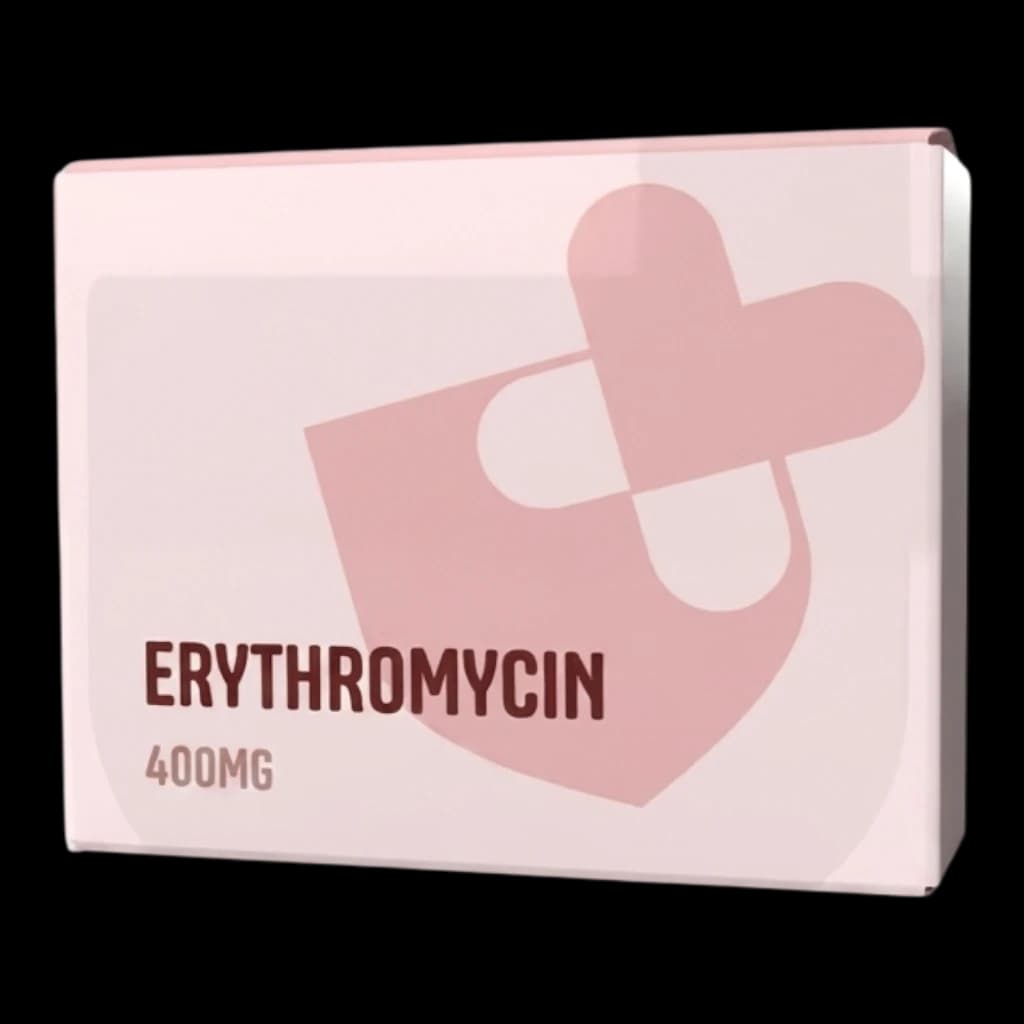
Erythromycin is a macrolide antibiotic used to treat impetigo when penicillin-type antibiotics (such as flucloxacillin) are unsuitable — most commonly due to penicillin allergy. Erythromycin is effective against the Staphylococcus aureus and Streptococcus pyogenes bacteria that cause impetigo. It is available in several formulations including tablets (erythromycin stearate), oral suspension (erythromycin ethyl succinate), and capsules (erythromycin base). Through Pharmacy First, your pharmacist can supply erythromycin for impetigo as a free NHS service without needing a GP appointment.
The dose depends on the formulation: erythromycin base/stearate: 250–500 mg four times daily for 5–7 days (take on an empty stomach); erythromycin ethyl succinate: 400–800 mg four times daily or twice daily for 5–7 days (take with food). Children’s doses are weight-based. Your pharmacist will determine the correct formulation, dose, and duration. Always complete the full course even if the skin appears to be healing.
Flucloxacillin is the first-line oral antibiotic for non-bullous impetigo per NICE guidance. However, erythromycin (or clarithromycin) is recommended as the alternative for patients who are allergic to penicillin, as flucloxacillin is a penicillin-based antibiotic. Erythromycin may also be selected if there are specific drug interactions or other contraindications to flucloxacillin. Both antibiotics are effective against the bacteria that commonly cause impetigo.
Yes, the NHS Pharmacy First service allows pharmacists to clinically assess and treat impetigo, including supplying oral antibiotics like erythromycin where appropriate. The pharmacist will examine the skin, confirm the diagnosis, determine whether topical or oral treatment is needed, and select the most suitable antibiotic. This free NHS service provides convenient access to treatment without a GP visit.
Common side effects include nausea, vomiting, abdominal cramps, and diarrhoea — erythromycin stimulates gut motility which commonly causes stomach discomfort. Taking the ethyl succinate form with food reduces nausea. A metallic taste may occur. Less common side effects include skin rash, hearing disturbances (reversible), and liver enzyme changes. Rare serious side effects include hepatotoxicity and QT prolongation. Seek immediate medical advice for jaundice, severe abdominal pain, or allergic reactions.
Yes, impetigo remains contagious until you have been taking antibiotics for 48 hours. After 48 hours of antibiotic treatment, you are generally no longer contagious, provided the sores are responding. During this time, maintain strict hygiene: wash hands regularly, keep sores covered, avoid sharing personal items, and children should stay home from school or nursery. The sores typically heal within 7–10 days of starting treatment.
NHS Pharmacy First is a free service that lets you get a remote video consultation and treatment for six common conditions without visiting your GP. It is available through NowPatient to NHS patients aged 18 and over in England.
The service covers six conditions: sinusitis, sore throats, infected insect bites, impetigo, shingles, and uncomplicated urinary tract infections (UTIs) in women. Each condition is subject to an eligibility screening before you can book a consultation.
Yes, the video consultation is completely free. If your clinician prescribes medication and you are not exempt from NHS prescription charges, you will pay a single NHS prescription charge. If you are exempt (for example, you are over 60 or on Income Support), there is no charge at all.
No. The service is commissioned by NHS England and is only available to patients registered with a GP in England. It is not available in Scotland, Wales, Northern Ireland, or outside the UK.
You are eligible if you are aged 18 or over and registered with the NHS in England. You must also pass a condition-specific eligibility screening, which is carried out by an assessment tool before you can book your consultation.
If you do not qualify for the service, NowPatient will signpost you to the right NHS care provider or service so you can still get the help you need. You can also download a referral note, explaining why you failed the assessment.
No. NHS Pharmacy First through NowPatient currently covers only the six listed conditions. For other conditions, please contact your GP or visit an NHS walk-in centre.
Log in to your NowPatient account and go to the NHS Pharmacy First Service Card in the NHS Hub. Select your condition, complete the eligibility screening, and if you qualify, follow the prompts to choose your preferred date, time, and clinician.
Yes. During booking, you can browse available clinicians and filter by gender and spoken languages. You can view each clinician’s name, licence number, and credentials before making your choice.
After booking, you will see a ‘Pre-consultation Requirements’ section with tips on how to prepare. You will also be asked to provide your consultation address and emergency contact details. You can opt in to receive an SMS reminder 30 minutes before your appointment.
The clinician will ask you questions to assess your condition and explore treatment options. If treatment is appropriate, you and the clinician will agree on the best option together. Medication is not guaranteed — it is provided only at the clinician’s discretion.
With your consent, the clinician may inform your GP of the treatment prescribed. We recommend agreeing to this, as your GP is responsible for your overall care and should have a record of the consultation.
Yes. You will receive an in-app and push notification summarising the consultation outcome, including any referrals to your GP and advice given by the clinician. You can view this in the ‘Notifications’ section of your homepage.
If your clinician prescribes medication, you will be directed to your Cart to complete the checkout process. This includes confirming your NHS exemption status, choosing a delivery address and method, and submitting payment.
If you are not exempt from NHS prescription charges, you will pay a single prescription charge per item. If you are exempt, you will not be charged. You will be asked to confirm your exemption status during checkout.
Yes. During the consultation, we will ask for your consent to provide the service. This allows us to communicate with your GP and share information with NHS England, NHS Improvement, and the NHS Business Services Authority (NHSBSA) when required.
Our clinicians are board-certified pharmacists registered with the General Pharmaceutical Council (GPhC). All clinicians undergo DBS background checks and a comprehensive licence verification process. The conditions and medications they can prescribe are strictly governed and reviewed in line with NHS guidelines.
Yes. The service is classified as a Class I medical device under UK MDR 2002 regulations. It complies with NHS standards DTAC, DCB 0160, and DCB 0129. Consultations are delivered via live video to ensure clinical safety and appropriate prescribing.
Yes. NowPatient operates from a HIPAA, DTAC, and Cyber Essentials Plus certified platform that ensures the highest levels of information security. Clinicians access systems on a zero-trust basis with single sign-on (SSO) technology.
Yes. As an NHS patient, our clinicians can access your GP record, including your medications, observations, and investigations. This helps them assess your condition safely and accurately.
We deliver to all postcodes in England. Some rural areas may experience slightly longer delivery times.
All orders are shipped in discreet, unmarked packaging. Temperature-sensitive medications are sent in cold chain-validated packaging to ensure product quality and safety.
We offer Royal Mail Standard Tracked & Signed (2–3 days) and Royal Mail Special Delivery (next working day, guaranteed before 1pm). Orders placed before 3pm Monday–Friday are dispatched the same day.
Your first order must be delivered to the address registered with NowPatient. After that, you can choose any delivery address, including your workplace.
Check the tracking details in the ‘Notification Feed’ section of your dashboard. If your delivery has not arrived within 10 days of the dispatch notification, contact us and we will work to resolve the issue.
NowPatient sends status updates by email and in-app notifications at every stage of your order, from placement through to delivery.
Yes. NowPatient’s pharmacists provide medication advice and counselling across all dispensing services. If you have questions about your prescribed medication, our pharmacy team is available to help.
You may receive a short survey about your experience. We encourage you to complete it, as your feedback helps us improve the service. It is especially helpful if you highlight areas for improvement.
You may be entitled to free NHS prescriptions from the NHS Pharmacy Service if you meet specific eligibility criteria. To claim exemption, the appropriate category must be selected on the prescription form and valid evidence may be required. The exemption categories are listed below:
A: Aged 60 or over, or under 16 (unless date of birth is printed on the form)
B: Aged 16, 17, or 18 and in full-time education
D: Maternity exemption certificate
E: Medical exemption certificate
F: Prescription prepayment certificate
W: HRT-only prescription prepayment certificate
G: Ministry of Defence prescription exemption certificate
L: HC2 (full help) certificate
H: Receiving Income-related Employment and Support Allowance (ESA)
S: Receiving Pension Credit Guarantee Credit (including partners)
U: Receiving Universal Credit and meeting eligibility criteria (Earnings ≤ £435, or ≤ £935 [if UC includes child element or limited capability for work)], in most recent assessment period)
You must only claim an exemption if they are entitled to it. Incorrect claims can result in penalty charges. Proof of eligibility should be provided if requested when collecting medication.
You may be entitled to certain medication items for free as listed below. Make sure you declare this when you checkout your prescription order.
For Contraceptive Use
For STI (Sexually Transmitted Infection) Treatment
For latent or active Tuberculosis (TB) or to treat adverse effects of TB treatment
You can check your exemption status by clicking below
Consultations, prescriptions, medication delivery, health monitoring – all in one place.
Wow! Excellent customer service. I submitted an email query, had a call…
Alison Hurst
I do not leave reviews, due to time and a rare condition I have. I…
Sherry M
Great experience getting the med. Clinician was very thorough.
Barbara Hill
Cannot speak highly enough of the service and assistance I have…
CJH
Very good experience - the clinician asked intelligent questions about…
Phil Daoust
Really excellent. Very thorough and professional pharmacist who guided…
Colin Glass
We are a broad skilled and passionate group of clinicians with experience of operating in regulated health systems in the United Kingdom & United States. Providing excellent care and advice is at the heart of everything we do.