






Treat Impetigo With Flucloxacillin
Learn how Flucloxacillin is used to treat Impetigo, including how it works, how to apply it safely, who it's suitable for, and what results you can expect. If you think you have Impetigo then you can check your eligibility for a free NHS funded video consultaton & treatment, without requiring a GP appointment.

VIRTUAL HEALTHCARE
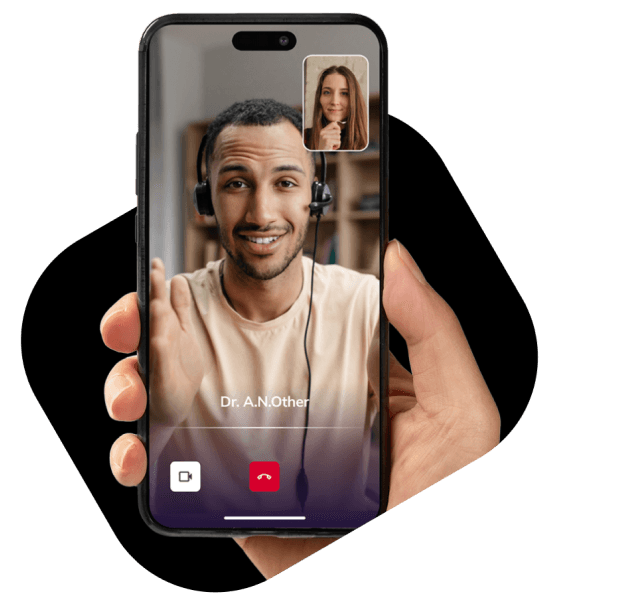
What to Expect From Your Online Video Consultation

How do I check if I’m eligible for a video consultation?
Video consultations are suitable for most patients who do not need a physical examination. They may not be appropriate if you require hands-on physical examination or need laboratory tests that cannot be done remotely. Video consultations are not a substitute for your regular doctor if you have a serious or life-threatening condition.
How do I complete my health profile?
Before booking, ensure your health profile is up to date. Your clinician will use this information to provide safe, personalised care. You may need to provide current medications and supplements, known allergies and adverse reactions, existing medical conditions, previous surgeries or hospitalisations, family medical history (where relevant), current symptoms or health concerns, height and weight (for BMI calculation), and blood pressure readings (where required).
How do I check my device is ready for a video consultation?
Make sure NowPatient has permission to access your camera and microphone, you have a stable internet or Wi-Fi connection, and you are using a compatible smartphone, tablet, or PC.
How do I select a service?
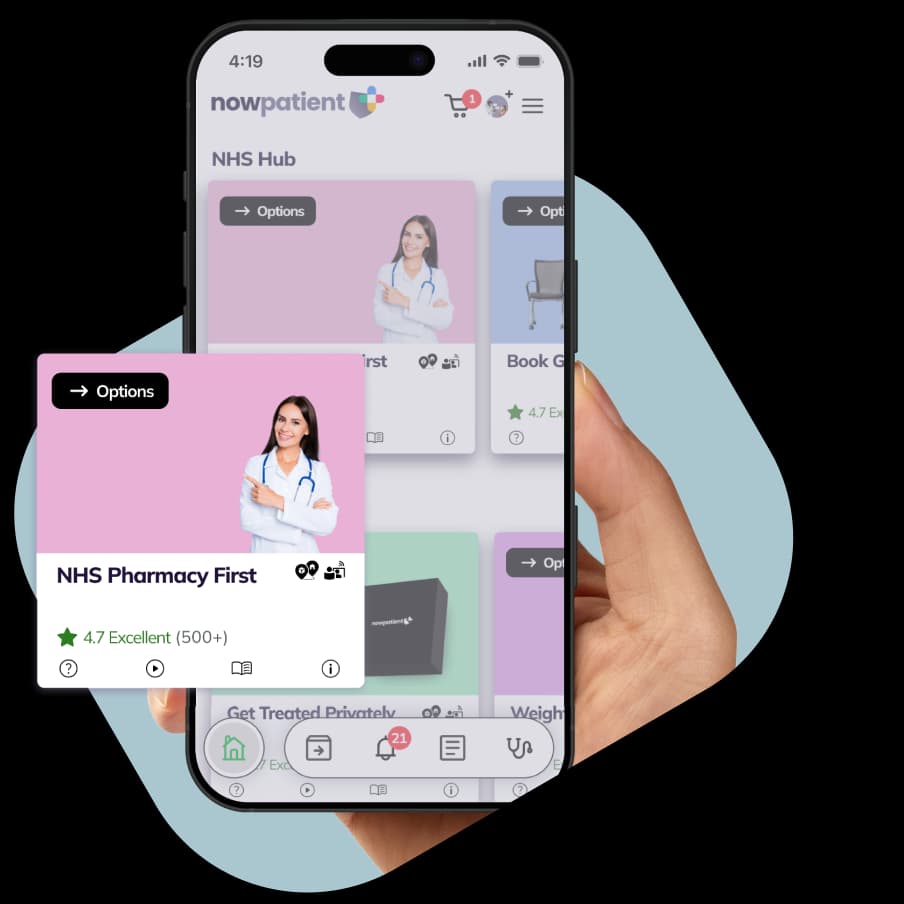
Log in to your NowPatient account and navigate to the relevant Service Card on your homepage. Follow the prompts for the service you need (e.g., NHS Pharmacy First, Weight Loss, Buying Treatments Online). Please remember, some services have eligibility requirements before you can book a consultation.
How do I choose a date for my appointment?
Select your preferred consultation date. You can add notes at this stage to help the clinician prepare for your session. Click Continue.
How do I choose a time for my appointment?
Select your preferred appointment time from the available slots and click Continue. Slots are available up to 7 days in advance.
How do I choose a clinician?
Browse available clinicians trained for your chosen service. You can filter by gender or spoken languages. Each clinician's full name, licence number, and specialist credentials are displayed. Select your preferred clinician and click Continue.
How do I review my booking?
Check the summary of your appointment and read the Pre-consultation Requirements for tips on how to prepare. Click Continue.
What safety information do I need to provide?
Enter your consultation address (where you will be during the call) and emergency contact details. You can also opt in to receive an SMS reminder 30 minutes before your appointment.
How do I confirm my booking?
Click Confirm Booking. You will receive an in-app confirmation pop-up, push and in-app notifications, and a confirmation email with details of what to expect.
How do I take my blood pressure via the app?
Some services require a recent blood pressure reading before your consultation. If prompted, open the blood pressure tool in the NowPatient app, read and agree to the disclaimer, enter your age, height, and gender, and follow the on-screen instructions. The tool uses your smartphone's front-facing camera — no cuff or wearable required. Classified as a Class I Medical Device (CE and UKCA certified). Available on iOS and Android only.
How do I join my video consultation?
At your scheduled time, open the NowPatient app and join your consultation.
How does identity verification work?
Your clinician will introduce themselves and verify your identity. Please have your ID ready.
What declarations do I need to confirm?
You will be reminded that you must complete the consultation for yourself, disclose all medical conditions, illnesses, and operations, disclose all prescription medications you are currently taking, and provide accurate and honest responses throughout. Withholding or providing false information can severely harm your health.
What happens during my clinical assessment?
Your clinician will carry out an assessment relevant to your chosen service. Depending on the service, this may lead to issuance of a prescription (added to your cart), guided counselling, discussion of test results, or general health advice.
What does it mean to consent to inform my doctor?
With your consent, your clinician may inform your regular doctor of the consultation outcome. NowPatient strongly recommends agreeing to this, as your GP is responsible for your overall care.
How will I receive my post-consultation summary?
You will receive a notification summarising the outcome of your appointment, any referrals made to your doctor, and any advice given by your clinician. If a referral letter was issued, you can view it in the Documents section of your account.
How do I complete my order if treatment was prescribed?
If your clinician prescribed a treatment, go to your Cart, complete any payment exemptions (such as NHS Exemption Declaration if applicable), select Checkout, choose your delivery address and method, confirm your billing address, review your order and submit payment. Your order will be sent to NowPatient’s licensed online pharmacy for processing and dispatch.
How do I complete the feedback survey?
You may receive a short survey about your experience. NowPatient encourages all patients to complete it — your feedback helps improve the service for everyone.
How do I cancel a video consultation, and what happens if I miss my appointment?
To cancel an appointment:
Go to the Consultations section of your account.
Select Upcoming Consultations.
Choose the appointment you wish to cancel.
Click Cancel and confirm.
Please cancel at least 24 hours in advance.
Missed appointments: After two missed appointments, your booking rights will be temporarily revoked. Contact the NowPatient support desk if you believe this was applied in error.
How do I contact NowPatient for help and support?
Contact Method | Details |
UK Phone | +44 20 388 51 500 |
US Phone | 1-866-967-1977 |
Hours (UK) | Monday–Friday, 9am–6pm GMT |
Hours (US) | Monday–Friday, 8am–5pm EST |
Support |
HOW IT WORKS
Common Questions About This Service

What is NHS Pharmacy First?
NHS Pharmacy First is a free service that lets you get a remote video consultation and treatment for six common conditions without visiting your GP. It is available through NowPatient to NHS patients aged 18 and over in England.
What conditions can be treated through NHS Pharmacy First?
The service covers six conditions: sinusitis, sore throats, infected insect bites, impetigo, shingles, and uncomplicated urinary tract infections (UTIs) in women. Each condition is subject to an eligibility screening before you can book a consultation.
Is the service really free?
Yes, the video consultation is completely free. If your clinician prescribes medication and you are not exempt from NHS prescription charges, you will pay a single NHS prescription charge. If you are exempt (for example, you are over 60 or on Income Support), there is no charge at all.
Is NHS Pharmacy First available outside England?
No. The service is commissioned by NHS England and is only available to patients registered with a GP in England. It is not available in Scotland, Wales, Northern Ireland, or outside the UK.
Who is eligible for NHS Pharmacy First?
You are eligible if you are aged 18 or over and registered with the NHS in England. You must also pass a condition-specific eligibility screening, which is carried out by an assessment tool before you can book your consultation.
What happens if I do not pass the eligibility screening?
If you do not qualify for the service, NowPatient will signpost you to the right NHS care provider or service so you can still get the help you need. You can also download a referral note, explaining why you failed the assessment.
Can I use this service for conditions not on the list?
No. NHS Pharmacy First through NowPatient currently covers only the six listed conditions. For other conditions, please contact your GP or visit an NHS walk-in centre.
How do I book an NHS Pharmacy First consultation?
Log in to your NowPatient account and go to the NHS Pharmacy First Service Card in the NHS Hub. Select your condition, complete the eligibility screening, and if you qualify, follow the prompts to choose your preferred date, time, and clinician.
Can I choose which clinician I see?
Yes. During booking, you can browse available clinicians and filter by gender and spoken languages. You can view each clinician’s name, licence number, and credentials before making your choice.
How should I prepare for my video consultation?
After booking, you will see a ‘Pre-consultation Requirements’ section with tips on how to prepare. You will also be asked to provide your consultation address and emergency contact details. You can opt in to receive an SMS reminder 30 minutes before your appointment.
What happens during the video consultation?
The clinician will ask you questions to assess your condition and explore treatment options. If treatment is appropriate, you and the clinician will agree on the best option together. Medication is not guaranteed — it is provided only at the clinician’s discretion.
Will the clinician tell my GP about the consultation?
With your consent, the clinician may inform your GP of the treatment prescribed. We recommend agreeing to this, as your GP is responsible for your overall care and should have a record of the consultation.
Will I receive a summary after the consultation?
Yes. You will receive an in-app and push notification summarising the consultation outcome, including any referrals to your GP and advice given by the clinician. You can view this in the ‘Notifications’ section of your homepage.
What happens if I am prescribed treatment?
If your clinician prescribes medication, you will be directed to your Cart to complete the checkout process. This includes confirming your NHS exemption status, choosing a delivery address and method, and submitting payment.
Do I need to pay for the prescribed medication?
If you are not exempt from NHS prescription charges, you will pay a single prescription charge per item. If you are exempt, you will not be charged. You will be asked to confirm your exemption status during checkout.
Do I need to give consent before the consultation?
Yes. During the consultation, we will ask for your consent to provide the service. This allows us to communicate with your GP and share information with NHS England, NHS Improvement, and the NHS Business Services Authority (NHSBSA) when required.
Who are the clinicians providing this service?
Our clinicians are board-certified pharmacists registered with the General Pharmaceutical Council (GPhC). All clinicians undergo DBS background checks and a comprehensive licence verification process. The conditions and medications they can prescribe are strictly governed and reviewed in line with NHS guidelines.
Is the NHS Pharmacy First service safe?
Yes. The service is classified as a Class I medical device under UK MDR 2002 regulations. It complies with NHS standards DTAC, DCB 0160, and DCB 0129. Consultations are delivered via live video to ensure clinical safety and appropriate prescribing.
Is my personal health information secure?
Yes. NowPatient operates from a HIPAA, DTAC, and Cyber Essentials Plus certified platform that ensures the highest levels of information security. Clinicians access systems on a zero-trust basis with single sign-on (SSO) technology.
Can the clinician access my GP records?
Yes. As an NHS patient, our clinicians can access your GP record, including your medications, observations, and investigations. This helps them assess your condition safely and accurately.
Where does NowPatient deliver Pharmacy First prescriptions?
We deliver to all postcodes in England. Some rural areas may experience slightly longer delivery times.
How is my medication packaged?
All orders are shipped in discreet, unmarked packaging. Temperature-sensitive medications are sent in cold chain-validated packaging to ensure product quality and safety.
What delivery options are available?
We offer Royal Mail Standard Tracked & Signed (2–3 days) and Royal Mail Special Delivery (next working day, guaranteed before 1pm). Orders placed before 3pm Monday–Friday are dispatched the same day.
Can I choose where my order is delivered?
Your first order must be delivered to the address registered with NowPatient. After that, you can choose any delivery address, including your workplace.
What should I do if my order has not arrived?
Check the tracking details in the ‘Notification Feed’ section of your dashboard. If your delivery has not arrived within 10 days of the dispatch notification, contact us and we will work to resolve the issue.
What order status updates will I receive?
NowPatient sends status updates by email and in-app notifications at every stage of your order, from placement through to delivery.
Can I get medication advice after my consultation?
Yes. NowPatient’s pharmacists provide medication advice and counselling across all dispensing services. If you have questions about your prescribed medication, our pharmacy team is available to help.
Will I be asked for feedback after my consultation?
You may receive a short survey about your experience. We encourage you to complete it, as your feedback helps us improve the service. It is especially helpful if you highlight areas for improvement.
What are NHS Prescription Exemption Categories?
You may be entitled to free NHS prescriptions from the NHS Pharmacy Service if you meet specific eligibility criteria. To claim exemption, the appropriate category must be selected on the prescription form and valid evidence may be required. The exemption categories are listed below:
Age-Related Exemptions
A: Aged 60 or over, or under 16 (unless date of birth is printed on the form)
B: Aged 16, 17, or 18 and in full-time education
Certificate-Based Exemptions
D: Maternity exemption certificate
E: Medical exemption certificate
F: Prescription prepayment certificate
W: HRT-only prescription prepayment certificate
G: Ministry of Defence prescription exemption certificate
L: HC2 (full help) certificate
Benefit-Related Exemptions
H: Receiving Income-related Employment and Support Allowance (ESA)
S: Receiving Pension Credit Guarantee Credit (including partners)
U: Receiving Universal Credit and meeting eligibility criteria (Earnings ≤ £435, or ≤ £935 [if UC includes child element or limited capability for work)], in most recent assessment period)
Important
You must only claim an exemption if they are entitled to it. Incorrect claims can result in penalty charges. Proof of eligibility should be provided if requested when collecting medication.
Prescription Item Level Exemptions
You may be entitled to certain medication items for free as listed below. Make sure you declare this when you checkout your prescription order.
For Contraceptive Use
For STI (Sexually Transmitted Infection) Treatment
For latent or active Tuberculosis (TB) or to treat adverse effects of TB treatment
Check if you have an exemption from paying NHS costs
You can check your exemption status by clicking below
HOW IT WORKS
Order Delivery Guide

How will my order be delivered?
All orders are shipped in discreet and unmarked packaging, making them suitable for delivery to your home, workplace, or a neighbour. For your protection and safety, your first order can only be delivered to the address that is registered with NowPatient. Future orders can be delivered to any address you choose.
Where does NowPatient deliver?
NowPatient delivers to the UK, Europe, and worldwide. NHS services (such as NHS Online Pharmacy and NHS Pharmacy First) are available to patients in England only. Our private services and online pharmacy are available across the UK, with international shipping available to European and worldwide addresses. Please note that some remote or rural postcodes may experience slightly longer delivery times, and tracking availability for worldwide orders may vary depending on the destination country.
What delivery options are available?
UK orders are shipped via Royal Mail Tracked 24 & Signed, with next-day delivery as standard. European deliveries are sent via Royal Mail Tracked and typically arrive within 3–5 working days. Worldwide deliveries take 7–21 working days and are tracked where available in the destination country.
Delivery charges apply for most services. Shipping is included in the price for patients using our Get Treated Privately service in England, and is free for NHS Quit Smoking Service orders.
When will my order be dispatched?
We aim to dispatch all orders placed Monday to Friday before 3:00pm on the same working day. Orders placed after 3:00pm, or over weekends and bank holidays, will be dispatched on the next available working day.
Do you offer next-day delivery?
Yes. All UK orders are shipped via Royal Mail Tracked 24 & Signed, which delivers next day as standard. To qualify for same-day dispatch, please place your order before 3:00pm Monday to Friday. Orders placed after this time, or over weekends and bank holidays, will be dispatched on the next available working day.
Do you deliver temperature-sensitive or cold-chain medications?
Yes. We use a specialist courier service for all thermo-sensitive deliveries (such as insulin, GLP-1 weight loss injections like Mounjaro, and other refrigerated medications). Cold chain-validated packaging is used throughout the entire delivery process to ensure product quality, safety, and efficacy are always maintained.
How is cold-chain packaging handled?
Temperature-sensitive products are packed using validated cold chain packaging that maintains the required storage temperature throughout transit. Your parcel will normally receive an estimated delivery window from the courier on the day of delivery, so you can ensure someone is available to receive it. If you have concerns about receiving a cold-chain delivery, please contact our customer care team in advance.
Do you deliver controlled drugs?
Yes. Controlled drugs are delivered using a specialist courier service to ensure secure and compliant handling in accordance with UK regulations. These deliveries will always require a signature upon receipt.
How do I track my order?
Once your order has been dispatched, you will receive a dispatch notification containing your tracking details. You can also view your tracking information at any time in the 'Notification Feed' section on your account dashboard. Tracking is available for all delivery options.
Will I receive status updates about my order?
Yes. NowPatient uses a structured notification system to keep you fully informed throughout the order process. Every time your order status changes — from approval through to dispatch and delivery — you will be notified immediately. Notifications are sent via email and appear in the 'Notifications' section of your account homepage (accessible via the bell icon). This includes updates when your treatment is approved, dispensed, and shipped.
What order statuses will I see?
You can expect to see the following key status updates: Order Received, Prescription Approved (where applicable), Order Dispensed, Dispatched (with tracking reference), and Delivered.
Can I change my delivery address?
For your first order, delivery must be made to the address registered with NowPatient at the time of sign-up. This is a safety measure to verify your identity and protect your account. From your second order onwards, you can select from any saved address in your account or add a new delivery address during checkout.
Can I have my order delivered to my workplace or a neighbour?
Yes. From your second order onwards, you can have your medication delivered to any address, including your workplace, a family member's address, or a neighbour. All parcels are sent in discreet, unmarked packaging, so the contents will not be identifiable.
How do I update or add a new delivery address?
You can manage your delivery addresses directly within your NowPatient account settings. Additional addresses can also be added during the checkout process when selecting your delivery address. Simply select 'Add a new address' and enter the required details.
What should I do if my order hasn't arrived?
If you have not received your order within the expected delivery window, please first check your tracking details in the 'Notification Feed' section of your account dashboard. If after 10 days of dispatch you have still not received your delivery, please contact our customer care team and we will work to resolve the issue as quickly as possible.
What if my order arrives damaged?
If your order arrives in a damaged condition, please do not use the medication and contact our customer care team immediately. Please retain the original packaging and, if possible, take photographs of the damage, as this will help us raise a claim with the courier and arrange a replacement for you as quickly as possible.
My tracking shows delivered but I haven't received my parcel — what should I do?
First, check with any neighbours or safe locations at your property (such as a porch or outbuilding). If you still cannot locate your parcel, please contact our customer care team and we will investigate the matter with the courier on your behalf.
What happens if I miss my delivery?
If you miss a delivery, the courier will typically leave a card with instructions for rescheduling or collecting your parcel from a local depot. For cold-chain deliveries, it is particularly important to arrange redelivery promptly to maintain product integrity. If you have concerns about a missed cold-chain delivery, please contact our customer care team for guidance.
If you ship international, do I need to handle duties?
No. Our prices include customs duties, wherever you are located.
How are NHS repeat prescriptions delivered?
Once your GP has approved your prescription request, NowPatient's regulated online pharmacy will dispense and dispatch your medication. You will be notified at each stage of the process. NHS prescriptions are dispatched via Royal Mail Tracked 24 & Signed for next-day delivery, provided the order is placed before 3:00pm on a
working day.
Is delivery free for NHS prescriptions?
No. There is a small cost applied to all NHS prescription deliveries. This allows us to keep our service operational. NHS Quit Smoking Service orders qualify for free delivery. If you are using the Get Treated Privately service in England, shipping is included within the consultation and treatment price.
Can I specify a preferred delivery date for my NHS prescription?
At this time, NowPatient dispatches orders on the same working day if placed before 3:00pm Monday to Friday. All UK NHS prescriptions are sent via Royal Mail Tracked 24 & Signed for next-day delivery, so you can plan accordingly once you receive your dispatch notification.
How are private prescription medications delivered after a telehealth consultation?
Following your telehealth or video consultation, if a treatment is prescribed, it will be added to your cart automatically. After you complete checkout and payment, your order is sent to NowPatient's regulated online pharmacy for processing. You will receive status updates at every stage and your medication will be dispatched in discreet, unmarked packaging.
How quickly will I receive medication after my consultation?
If your consultation and checkout are completed before 3:00pm on a working day, we aim to dispatch your medication the same day. The total time to delivery will depend on the delivery method you select at checkout.
Is the packaging discreet?
Yes. All NowPatient orders are shipped in plain, unmarked packaging with no branding or indication of the contents on the outside. The packaging is suitable for delivery to your home, workplace, or a neighbour.
Will my parcel require a signature?
Yes. All UK orders are sent via Royal Mail Tracked 24 & Signed, which requires a signature upon delivery. Controlled drug deliveries will always require a signature regardless of the shipping method. For cold-chain deliveries, a signature is required to ensure someone is available to receive the medication promptly and maintain product integrity. For European and worldwide orders, signature requirements may vary depending on the destination country and the service available.
How do I contact NowPatient about a delivery issue?
You can reach our customer care team through the NowPatient website or app. Go to your account and use the Help or Contact Us section to raise a query. Our team is available to assist with any delivery-related concerns including missing parcels, tracking queries, or delivery address changes.
What are NowPatient's customer care hours?
Please visit the Contact Us section of the NowPatient website or app for up-to-date information on our customer care operating hours and available contact methods.
MEDICAL INFORMATION
Flucloxacillin Key Facts


(Current Version)
 Written by
 Medically Reviewed by
Who Manufactures Flucloxacillin?
Flucloxacillin is manufactured by various MHRA approved generic manufacturers.
What Form is Flucloxacillin available in?
Flucloxacillin is available as capsules and as an oral suspension.
How do I store Flucloxacillin?
Store Flucloxacillin capsules in the original package, at room temperature, below 25° C, away from excess moisture and heat. Once made up, store Flucloxacillin suspension in the fridge at temperatures between 2 and 8 degrees, as specified by the manufacturer.
What is Flucloxacillin used for?
Flucloxacillin is used for the treatment of widespread non-bullous impetigo under the NHS England commissioned Pharmacy First service.
How does Flucloxacillin work?
Flucloxacillin is a β -lactam antibiotic which has a bactericidal effect upon many Gram-positive organisms including β -lactamase-producing staphylococci and streptococci.
When will I feel better and what should I do if I do not get better?
You should begin to feel better within a few days of starting Flucloxacillin, but remember to finish the full course of antibiotics. If symptoms worsen rapidly or significantly at any time, speak to your Doctor for medical advice.
Can I drink alcohol while taking Flucloxacillin?
Yes, you can drink alcohol while taking Flucloxacillin. However, avoiding alcohol will help you get over your infection faster.
Do I need to take Flucloxacillin with food?
It's best to take Flucloxacillin on an empty stomach. That means taking it at least 1 hour before food, or at least 2 hours after. Capsules should be taken with a full glass of water, to reduce the risk of oesophageal pain.
Who can and cannot take Flucloxacillin?
You may take Flucloxacillin if you meet the inclusion criteria for impetigo for the Pharmacy First service, but may not take Flucloxacillin if you meet the exclusion criteria for impetigo for the Pharmacy First service.
How often do I need to take Flucloxacillin?
You will need to take Flucloxacillin for 5 days. The dose of Flucloxacillin you take will depend on your age.
What are the side effects of Flucloxacillin?
Common side effects of Flucloxacillin include gastrointestinal disturbances. Other less common side effects include nausea, skin rash, hypersensitivity, vomiting and low blood platelet levels.
Are there any Interactions of Flucloxacillin with other drugs?
Flucoxacillin interacts with other drugs such as methotrexate, probenecid, and the Typhoid vaccine. Speak to your healthcare provider before you start taking Flucloxacillin.
Other important information about Flucloxacillin
Take Flucloxacillin at regular intervals and finish the course even if your symptoms improve. Take the capsules or oral solution (or oral suspension) with a glass of water and do not lie down immediately after taking (to reduce the risk of oesophageal pain after taking). If you experience dizziness or drowsiness, do not drive or operate machinery. Seek medical advice in the event of an adverse reaction or if any other new symptoms develop.
Does Flucloxacillin interfere with conception and contraception?
Flucloxacillin does not affect fertility in men or women and does not stop any type of contraception from working, however if Flucloxacillin makes you vomit or have severe diarrhoea for more than 24 hours, your contraceptive pills may not protect you from pregnancy.
Can I use Flucloxacillin when breast feeding?
Flucloxacillin should only be administered to a breast-feeding mother when the potential benefits outweigh the potential risks associated with the treatment. Speak to your doctor if you are breastfeeding and are planning to take Flucloxacillin.
Can I use Flucloxacillin if I am pregnant or planning to become pregnant?
Flucloxacillin should only be used in pregnancy when the potential benefits outweigh the potential risks associated with treatment. Speak to your doctor if you are pregnant and are planning to take Flucloxacillin.
NowPatient has taken all reasonable steps to ensure that all material is factually accurate, complete, and current. However, the knowledge and experience of a qualified healthcare professional should always be sought after instead of using the information on this page. Before taking any drug, you should always speak to your doctor or another qualified healthcare provider.
The information provided here about medications is subject to change and is not meant to include all uses, precautions, warnings, directions, drug interactions, allergic reactions, or negative effects. The absence of warnings or other information for a particular medication does not imply that the medication or medication combination is appropriate for all patients or for all possible purposes.
FAQs
Answers to Popular Questions About How Flucloxacillin Treats Impetigo
What is Flucloxacillin and how is it used for impetigo?
Flucloxacillin is a penicillinase-resistant penicillin antibiotic and is the first-line oral antibiotic for treating impetigo, as recommended by NICE. It is particularly effective against Staphylococcus aureus (including penicillinase-producing strains), which is the most common cause of impetigo. Flucloxacillin is available as 250 mg and 500 mg capsules and as an oral solution for children. Through the NHS Pharmacy First service, a pharmacist can assess impetigo and supply flucloxacillin directly without a GP appointment.
What is the dose of Flucloxacillin for impetigo?
Adults and children over 10 years: 500 mg four times daily for 5–7 days. Children aged 2–9 years: 250 mg four times daily. Children aged 1 month–1 year: 62.5–125 mg four times daily (as oral solution). Take flucloxacillin on an empty stomach — at least 30 minutes before food or 2 hours after food — as food significantly reduces absorption. Space doses evenly throughout the day (approximately every 6 hours). Complete the full course.
Why is Flucloxacillin the preferred antibiotic for impetigo?
Flucloxacillin is first-line because it is highly effective against Staphylococcus aureus, including strains that produce penicillinase (an enzyme that destroys standard penicillin). Staphylococcus aureus is the most common cause of impetigo in the UK. Flucloxacillin has a well-established safety profile, is well-absorbed orally, and achieves good concentrations in the skin. NICE recommends it as the first-choice oral antibiotic for non-bullous impetigo when topical treatment is insufficient.
Can I get Flucloxacillin for impetigo through Pharmacy First?
Yes, the NHS Pharmacy First service enables pharmacists to assess and treat impetigo directly, including supplying flucloxacillin where clinically indicated. The pharmacist will examine the affected skin, assess severity, and determine whether topical treatment alone is sufficient or whether oral flucloxacillin is needed. This free NHS service provides fast, convenient access to treatment.
What are the side effects of Flucloxacillin?
Common side effects include nausea, diarrhoea, and mild stomach upset. Skin rash may occur. An important rare side effect is cholestatic hepatitis (liver inflammation) — this can occur during treatment or up to 2 months after completing the course, and risk increases with age (over 55) and courses longer than 14 days. Allergic reactions including anaphylaxis can occur in penicillin-allergic patients. If you are allergic to penicillin, flucloxacillin must not be used — your pharmacist will prescribe an alternative such as clarithromycin or erythromycin.
Who should not take Flucloxacillin?
Flucloxacillin must not be taken by anyone with a known allergy to penicillin or a previous history of flucloxacillin-associated hepatitis. Caution is advised in patients with severe liver disease. Patients over 55 and those receiving treatment for more than 14 days have an increased risk of hepatic side effects. Always inform the pharmacist of any allergies, liver conditions, or medications you are taking.
When is topical treatment enough, and when do I need oral Flucloxacillin?
Topical treatment (fusidic acid cream or hydrogen peroxide cream) is usually sufficient for localised, non-bullous impetigo affecting a small area. Oral flucloxacillin is recommended when the impetigo is widespread (affecting more than one area), bullous, not responding to topical treatment, or if the patient is systemically unwell. Your Pharmacy First pharmacist will assess the extent and severity to determine the most appropriate treatment.
Experienced a Side Effect?
Report to Yellow Card (UK) or MedWatch (US)




OUR CUSTOMERS VIEW
What Customers Love About Our Service
We want everyone to be happy and healthy, that’s what keeps us going. Read what some of them have to say about us.
- Should be WOW patient!
Wow! Excellent customer service. I submitted an email query, had a call back within 30 minutes and a consultation arranged for that evening. Amiss was completely brilliant! Very knowledgeable, very relatable and very professional. Answered all my questions and came up with a plan .... medication was posted out to me the next day. Very happy, totally recommend this service, would have given 10 stars 🌟 if I could.
Alison HurstGB

AH
- NowPatient is worth your time!
I do not leave reviews, due to time and a rare condition I have. I initially left a message, my call was returned within 2 hours or less. NowPatient offers 4 discount programs. I worked with Jay, he was genuine and wanted to help me all while giving me amazing customer service. Even though I didn't qualify, he gave me some suggestions and tips while encouraging me to follow up with the manufacturer along with other things I could do. This is the real deal, not a scam, and not a waste of your time. Amazing!! Thank you, Jay!
Sherry MUS
SM
- Great experience getting the med
Great experience getting the med. Clinician was very thorough.
Barbara HillGB
BH
- Excellent service
Cannot speak highly enough of the service and assistance I have received from NowPatient. I was dealing with a very kind and helpful clinician who couldn't do enough to assist. He was knowledgeable about the medication being prescribed and the consultation was thorough. There were some hurdles to overcome to receive the medication overseas and nothing was too much trouble. Highly recommend.
CJHNZ
CH
- Very good experience
Very good experience - the clinician asked intelligent questions about my insomnia and taught me a lot at the same time. And the medication was dispatched immediately. I’d definitely use them again.
Phil DaoustGB
PD
- Really excellent
Really excellent. Very thorough and professional pharmacist who guided me through the medication and assessed my suitability. I tried two other online pharmacies and Now Patient were streets ahead.
Colin GlassTH
CG

Medicines Experts
Meet Our Medical Team
We are a broad skilled and passionate group of clinicians with experience of operating in regulated health systems in the United Kingdom & United States. Providing excellent care and advice is at the heart of everything we do. You can read more about our medical team by visiting the medical team page or learn more about how we curate content by visiting our editorial process

DeLon Canterbury
US Board Certified Pharmacist/PGX & Deprescribing Specialist

Monica Khosla
Medical Writer

Stefano Mirabello
Pharmacist Independent Prescriber, Clinical Safety Officer (CSO), Pharmacist

Ketan Patel
Pharmacist Independent Prescriber, Pharmacist

Rajive Patel
Medical Writer

Jamie Winn
US Board Certified Pharmacist

Daniel Cheung
Pharmacist Independent Prescriber, Pharmacist

Navin Khosla
UK Responsible Person (UKRP), Pharmacist Independent Prescriber, Clinical Safety Officer (CSO), Pharmacist
Amish Patel
Pharmacist Independent Prescriber, Superintendant Pharmacist, Pharmacist

Aseel Hamoud Bedan
Hospital Consultant

Ihtesham Sabri
Medical Director