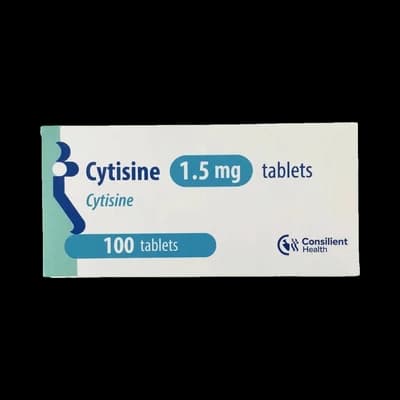
Cytisine 1.5mg tablets for quitting smoking
Get fast, effective support to help you quit smoking. Our trained clinicians can assess you virtually and, where clinically appropriate, provide Cytisine 1.5mg tablets without needing a GP appointment.

Medical Information
Cytisine 1.5mg tablets Treatment
Summary
Products Name
Pack Size
Generic Name
Manufacturer name
Medical Information & Usage
How to Use
Dosage
Warnings
Ingredients
Active Ingredient
Also Contains
Storage Requirements
Storage
Other Important Information
Frequently asked questions
What is Cytisine and how does it help you quit smoking?
Cytisine is a plant-based smoking cessation medication derived from the seeds of the golden rain tree (Cytisus laburnum). It works as a partial agonist at alpha-4 beta-2 nicotinic acetylcholine receptors — the same mechanism as Champix (varenicline). Cytisine reduces nicotine cravings and withdrawal symptoms while also reducing the rewarding effect of smoking. It has been used for smoking cessation in Eastern Europe for over 50 years and is now available through the NHS. It approximately doubles quit rates compared to placebo.
How do I take Cytisine tablets?
Cytisine follows a 25-day tapering course: Days 1–3: 1 tablet (1.5 mg) every 2 hours while awake (6 tablets daily). Days 4–12: 1 tablet every 2.5 hours (5 tablets daily). Days 13–16: 1 tablet every 3 hours (4 tablets daily). Days 17–20: 1 tablet every 5 hours (3 tablets daily). Days 21–25: 1–2 tablets daily. Your quit date should fall between days 3–5 of treatment. The course is significantly shorter than Champix (25 days vs 12 weeks).
Can I get Cytisine through the NHS Quit Smoking service?
Yes, cytisine 1.5 mg tablets are available through NHS smoking cessation services, including community pharmacy. It is often a preferred option due to its effectiveness, short treatment course, and lower cost compared to varenicline. Your pharmacist can assess your suitability and supply cytisine as part of a supported quit attempt through the NHS Quit Smoking service.
How does Cytisine compare to Champix?
Cytisine and Champix (varenicline) share the same mechanism of action as partial nicotinic receptor agonists, and clinical evidence suggests similar quit rates. The key differences: cytisine has a much shorter course (25 days vs 12 weeks), is plant-derived, is less expensive, and has been used for over 50 years. Champix may have slightly more robust clinical trial data. With the supply issues affecting Champix, cytisine has become an important alternative. Side effects are comparable, though cytisine may cause slightly less nausea.
What are the side effects of Cytisine?
Common side effects include nausea, dyspepsia (indigestion), dry mouth, and headache. Gastrointestinal symptoms are the most frequently reported. Insomnia and taste disturbance may also occur. Side effects are generally mild and improve as the dose tapers. Taking cytisine after food may reduce nausea. Overall, cytisine has a well-established safety profile from decades of use.
Who should not take Cytisine?
Cytisine should be used with caution in patients with cardiovascular disease (unstable angina, recent heart attack, uncontrolled hypertension), as it has mild sympathomimetic effects. It is not recommended during pregnancy or breastfeeding. Caution is advised in patients with severe kidney or liver impairment. Tell your pharmacist about all your medical conditions before starting treatment.
Can I use Cytisine alongside nicotine replacement therapy?
The combination of cytisine and NRT has not been extensively studied. Since cytisine acts on the same nicotinic receptors as nicotine, combining them may increase side effects. Generally, cytisine is used as a standalone treatment. Discuss with your pharmacist if you are considering combining treatments.
What is the NHS Quit Smoking service on NowPatient?
NowPatient’s NHS Quit Smoking service is a free 12-week programme that helps you continue your quit smoking journey after a hospital stay. Qualified Stop Smoking Practitioners provide behavioural support and prescribe medication through remote video consultations, so you do not need to visit your GP.
How long does the programme last?
The programme runs for 12 weeks from your initial consultation. It includes four consultation stages: an initial assessment, a 1-week interim check-in, a 4-week milestone consultation, and a final 12-week consultation where you are discharged from the service.
Is the NHS Quit Smoking service really free?
The consultations and delivery are completely free. If your clinician prescribes medication and you are not exempt from NHS prescription charges, you will pay a single prescription charge. If you are exempt (for example, you are over 60 or on Income Support), there is no charge at all.
Is this service available outside England?
No. The service is commissioned by NHS England and is only available to patients registered with a GP in England. It is not available in Scotland, Wales, Northern Ireland, or outside the UK.
Who is eligible for the NHS Quit Smoking service?
You may qualify if you are aged 18 or over, registered with the NHS in England, and have been referred by an NHS hospital or NHS Trust tobacco dependency team. The service is for patients who started smoking cessation treatment during a hospital stay and wish to continue after discharge.
Can I self-refer to this service?
No. You need a referral from an NHS hospital or NHS Trust tobacco dependency team. You cannot access this service without one. If you are looking for smoking cessation support without a hospital referral, contact your GP or local stop smoking service.
What happens if I do not pass the eligibility screening?
If you do not qualify, NowPatient will signpost you to the right NHS care provider or service so you can still get the support you need.
What happens at the initial consultation?
Your clinician will verify your hospital referral details, confirm whether you received medication on discharge, assess your suitability for treatment, and agree on a treatment plan with you. If appropriate, a prescription will be issued. You should book this within 5 days of your referral.
What happens at the interim consultation (1 week)?
Your clinician checks in on your progress and smoking status, provides behavioural support, discusses any challenges or side effects, and prescribes additional medication if needed.
What happens at the 4-week consultation?
This is a key milestone. Your clinician assesses your smoking status, records your 4-week quit outcome, and discusses continuing treatment to prevent relapse. Research shows that staying smoke-free for 4 weeks makes you 5 times more likely to quit for good.
What happens at the 12-week consultation?
Your clinician assesses your final smoking status, records your 12-week quit outcome, provides advice on staying smoke-free long-term, notifies your GP and the hospital tobacco dependency team of your progress, and discharges you from the service.
How do I know when to book my follow-up consultations?
NowPatient sends you reminders 7 days before each planned follow-up consultation via push and in-app notifications. You do not need to track the dates yourself.
Will my GP be informed about my treatment?
With your consent, your clinician will inform your GP of the treatment prescribed at each stage. We recommend agreeing to this, as your GP is responsible for your overall care and should have a record of your consultations and medication.
How do I book my initial consultation?
Log in to your NowPatient account and go to the NHS Quit Smoking Service Card in the NHS Hub. Select ‘Check eligibility’, complete the screening quiz, and if you qualify, follow the prompts to choose your date, time, and clinician.
Can I choose which clinician I see?
Yes. During booking, you can browse available clinicians and filter by gender and spoken languages. You can view each clinician’s name, licence number, and credentials before selecting.
How should I prepare for my video consultation?
After booking, you will see ‘Pre-consultation Requirements’ with preparation tips. You will also be asked to provide your consultation address and emergency contact details. You can opt in to an SMS reminder 30 minutes before your appointment.
What medications can be prescribed through the service?
Your clinician may prescribe Cytisinicline tablets, Varenicline tablets (Champix), or a range of Nicotine Replacement Therapy (NRT) products including patches (24-hour and 16-hour), lozenges, gum, oral spray, inhalator, nasal spray, and sublingual tablets. The choice depends on your medical history, dependence level, and preferences.
Can I use more than one NRT product at the same time?
Yes. Combination therapy — for example, patches plus a fast-acting product like lozenges or gum — may be recommended for heavier smokers. Your clinician will discuss the best approach with you.
Is medication guaranteed after a consultation?
No. Medication is provided only at the discretion of the assessing clinician and based on NHS eligibility criteria. Your clinician will prescribe treatment only if it is safe and suitable for you.
Can I get medication advice from NowPatient?
Yes. NowPatient’s pharmacists provide medication advice and counselling across all dispensing services. If you have questions about your smoking cessation medication, our pharmacy team is available to help.
How do I complete my order after treatment is prescribed?
After your consultation, go to your Cart, complete the NHS Exemption Declaration for each item, choose your delivery address and method, confirm your billing address, review your order, and submit payment. Delivery is free.
Do I need to pay for my medication?
If you are not exempt from NHS prescription charges, you will pay a single prescription charge. If you are exempt, there is no charge. You confirm your exemption status during checkout.
Who are the clinicians providing this service?
Our clinicians are board-certified pharmacists and pharmacy technicians registered with the General Pharmaceutical Council (GPhC). All undergo DBS background checks and licence verification. The medications they prescribe are strictly governed and reviewed in line with NHS guidelines.
Is the NHS Quit Smoking service safe?
Yes. The service is classified as a Class I medical device under UK MDR 2002 regulations. It complies with NHS standards DTAC, DCB 0160, and DCB 0129. Consultations are delivered via live video to ensure clinical safety.
Is my personal health information secure?
Yes. NowPatient operates from a HIPAA, DTAC, and Cyber Essentials Plus certified platform with the highest levels of information security. Clinicians access systems on a zero-trust basis with single sign-on (SSO) technology.
Can the clinician access my GP records?
Yes. As an NHS patient, our clinicians can access your GP record, including medications, observations, and investigations. This helps them assess your condition safely and make appropriate prescribing decisions.
Do I need to give consent before the consultation?
Yes. During the consultation, we will ask for your consent to provide the service. This allows us to communicate with your GP and share information with NHS England, NHS Improvement, and the NHS Business Services Authority (NHSBSA) when required.
Where does NowPatient deliver Quit Smoking prescriptions?
We deliver to all postcodes in England. Some rural areas may experience slightly longer delivery times. Delivery is free for all NHS Quit Smoking orders.
How is my medication packaged?
All orders are shipped in discreet, unmarked packaging. Temperature-sensitive items are sent in cold chain-validated packaging to maintain product quality and safety.
What delivery options are available?
We offer Royal Mail Standard Tracked & Signed (2–3 days) and Royal Mail Special Delivery (next working day, guaranteed before 1pm). Orders placed before 3pm Monday–Friday are dispatched the same day.
Can I choose where my order is delivered?
Your first order must be delivered to the address registered with NowPatient. After that, you can choose any delivery address, including your workplace or a neighbour’s address.
What should I do if my order has not arrived?
Check the tracking details in the ‘Notification Feed’ section of your dashboard. If your delivery has not arrived within 10 days of dispatch, contact us and we will work to resolve the issue.
What order status updates will I receive?
NowPatient sends status updates by email and in-app notifications at every stage of your order.
What are NHS Prescription Exemption Categories?
You may be entitled to free NHS prescriptions if you meet specific eligibility criteria. To claim exemption, the appropriate category must be selected on the prescription form and valid evidence may be required. The exemption categories are listed below:
Age-Related Exemptions
A: Aged 60 or over, or under 16 (unless date of birth is printed on the form)
B: Aged 16, 17, or 18 and in full-time education
Certificate-Based Exemptions
D: Maternity exemption certificate
E: Medical exemption certificate
F: Prescription prepayment certificate
W: HRT-only prescription prepayment certificate
G: Ministry of Defence prescription exemption certificate
L: HC2 (full help) certificate
Benefit-Related Exemptions
H: Receiving Income-related Employment and Support Allowance (ESA)
S: Receiving Pension Credit Guarantee Credit (including partners)
U: Receiving Universal Credit and meeting eligibility criteria (Earnings ≤ £435, or ≤ £935 [if UC includes child element or limited capability for work)], in most recent assessment period)
Important
You must only claim an exemption if they are entitled to it. Incorrect claims can result in penalty charges. Proof of eligibility should be provided if requested when collecting medication.
Prescription Item Level Exemptions
You may be entitled to certain medication items for free as listed below. Make sure you declare this when you checkout your prescription order.
For Contraceptive Use
For STI (Sexually Transmitted Infection) Treatment
For latent or active Tuberculosis (TB) or to treat adverse effects of TB treatment
Check if you have an exemption from paying NHS costs
You can check your exemption status by clicking below
Your health shouldn’t wait.
Consultations, prescriptions, medication delivery, health monitoring – all in one place.

Rated excellent on Trustpilot
Meet our medical team
We are a broad skilled and passionate group of clinicians with experience of operating in regulated health systems in the United Kingdom & United States. Providing excellent care and advice is at the heart of everything we do.