Buy Tamiflu Online
Book a quick face-to-face video consultation with a certified prescribing pharmacist, nurse, or doctor. If approved, your Tamiflu will be prescribed* and delivered straight to your door with tracked delivery. No hidden fees. No delays. Just expert care.
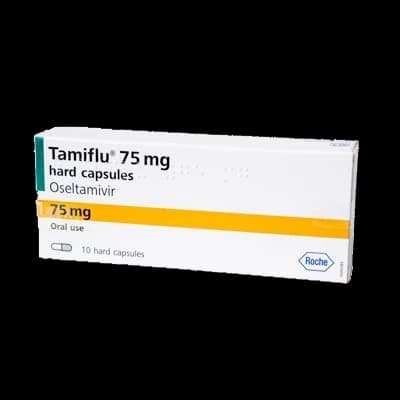
Tamiflu is indicated for the treatment of Influenza.
*Includes Free Private Prescription & Consultation.
Manufactured by Roche.
Excellent4.9 out of 5Trustpilot

Select pack size & strength
Tamiflu
Select pack size & strength
*Your clinician will recommend the right strength and quantity for you during the consultation.
Treatment$53.80
Shipping & import duties$20.00
Total if approved$73.80
How it works
Order Online
Tamiflu Prices
| Brand/Generic | Form | Dosage | Quantity | Price | Delivery Cost | Consultation Cost |
|---|---|---|---|---|---|---|
| TamifluBrand | Capsules | 75mg | 10 | $53.80 | $0.00*(with Core+ Plan) | $0.00 |
Key facts about Tamiflu
Other Related Names or Treatments
About Tamiflu
Tamiflu, manufactured by Roche, contains oseltamivir (neuraminidase inhibitor) an antiviral drug as its active ingredient. It is used for the prevention and treatment of influenza A and influenza B, which both cause seasonal flu.
Tamiflu is prescribed to patients that have had flu symptoms for under 48 hours but are at high risk of complications. It is also prescribed to vulnerable patients at risk of influenza infection, that have been exposed to the flu virus to prevent them from developing symptoms.
NowPatient offers Tamiflu as a treatment for influenza only, following an online consultation with a prescribing clinician.
Key facts of Tamiflu
- For the treatment and prevention of seasonal flu caused by influenza viruses A and B
- Tamil has some common side effects which include headaches, nausea, and vomiting
- It can be dangerous if you take Tamiflu with certain medications. If you’re not sure if it is safe, discuss this with the prescribing clinician
- Tamiflu is not an alternative for the annual flu vaccination
Who is Tamiflu suitable for?
Tamiflu is suitable if you are:
- Over 65 years old
- Have a weakened immune system
- Have diabetes
- Have a neurological condition
Who is Tamiflu not suitable for?
Tamiflu may not be suitable for some people. To make sure it’s safe for you, speak to the prescribing clinician about other medical conditions you may before taking Tamiflu if you:
- Have had an allergic reaction to the active ingredient oseltamivir phosphate
- Have bacterial infections
- Have kidney disease, liver or heart problems
How and where to get Tamiflu?
You can buy Tamiflu safely and securely from NowPatient. You can start a consultation today for free and if you qualify for treatment, you only pay for the cost of the medication. Delivery is made to your home or office from our registered pharmacy.
Our service is certified, safe and effective, and we only ever treat conditions. If you book a consultation with a prescribing clinician for the treatment of influenza, you can discuss if Tamiflu is a suitable treatment option for you.
At the end of the consultation, the clinician will decide if a treatment plan is suitable for you. If it is, the clinician will issue you with a prescription which can then be ordered, paid for and delivered directly to your chosen address by NowPatient.
Dosage and strength for Tamiflu for influenza
Tamiflu is available as a 75 mg capsule when used for influenza.
Information about how to use Tamiflu for influenza
Tamiflu should be taken orally each day for 5-10 days. Take Tamiflu as follows:
- Adults over 40kg: Two 75mg capsules every day for 5 days
- Preventing flu in adults over 40kg: One 75mg capsule every day for 10 days
If you forget to take a dose of Tamiflu, take it as soon as you remember, but do not double up your doses to replace a missed dose, and do not take a Tamiflu capsule less than 2 hours before your next dose is due.
Please read the patient information leaflet provided or speak to a healthcare professional for further advice.
What happens if you take too much Tamiflu?
If you take more than prescribed, then it can lead to some unpleasant side effects. You should talk to your doctor or reach out to one of our prescribing clinicians, if you have taken too much Tamiflu and you experience any of the following side effects:
What are the side effects of Tamiflu?
In clinical trials side effects of Tamiflu when compared to placebo are split into common and serious.
Most common side effects include:
- Headaches, dizziness, tiredness
- Nausea and vomiting
- Cold sores
- Bronchitis
- Sore throats, coughs, runny noses
- Fevers
- Stomach aches
If you experience any serious side effects, you should contact NHS 111.
If you experience a serious allergic reaction with the signs shown below you should contact emergency services on 999.
- Your lips, mouth, throat or tongue suddenly become swollen
- You’re breathing very fast or struggling to breathe (you may become very wheezy or feel like you’re choking or gasping for air)
- Your throat feels tight or you’re struggling to swallow
- Your skin, tongue or lips turn blue, grey or pale (if you have black or brown skin, this may be easier to see on the palms of your hands or soles of your feet)
- You suddenly become very confused, drowsy or dizzy
- Someone faints and cannot be woken up
Always report adverse effects to the MHRA yellow card reporting system. You can read more about this here How and where do I report side effects of my medication? – NowPatient
Information about taking Tamiflu at the same time as other medications or herbal supplements
There is not enough evidence to suggest there are any drug interactions between herbal supplements and Tamiflu. In any event, you should let your prescribing clinician know if you are taking any herbal supplements.
Can Tamiflu taken for influenza be taken long term?
The recommended treatment time with Tamiflu is 5 to 10 days. If your condition has not improved within this time, speak to your doctor for further medical advice.
Is there a herbal Tamiflu?
No. Herbal Tamiflu does not exist. If you have been marketed such a formulation, it may be fake.
Can women use Tamiflu?
Women can take Tamiflu for the treatment of influenza. Pregnant women however, may be advised not to take Tamiflu. Speak to your doctor before taking Tamiflu if you’re pregnant or breastfeeding.
Should I avoid any particular food or drink when taking Tamiflu?
You can eat and drink normally when taking Tamiflu for influenza. However, alcohol may increase the severity of your flu symptoms, so you are advised to limit your alcohol intake to allow yourself to recover.
What lifestyle changes can I make to help me with influenza?
- Avoid close contact with people suspected of having the flu
- Stay home when you are not feeling well
- Cover your mouth and nose when coughing or sneezing
- Clean your hands regularly
- Avoid touching your eyes, nose or mouth.
Alternatives to Tamiflu
An alternative for the treatment of the flu virus includes zanamivir (Relenza).
Sources
FAQs
Answers to Popular Questions About Tamiflu
What is Tamiflu?
Tamiflu is a brand-name antiviral medication containing oseltamivir phosphate. It is used for the treatment and prevention of influenza (flu) types A and B. Tamiflu is available as capsules (30 mg, 45 mg, 75 mg) and as an oral suspension. It is a prescription-only medicine in the UK. Tamiflu is most effective when started within 48 hours of flu symptom onset and can reduce the duration of illness by approximately 1–2 days. It is also used as post-exposure prophylaxis during flu outbreaks.
How does Tamiflu work?
Tamiflu (oseltamivir) is a neuraminidase inhibitor. Neuraminidase is an enzyme on the surface of influenza virus particles that is essential for the release of newly formed viral particles from infected cells. By inhibiting neuraminidase, oseltamivir prevents new virus particles from spreading to infect other cells, limiting viral replication and spread within the body. This reduces the severity and duration of flu symptoms and can reduce the risk of complications.
Who should take Tamiflu?
Tamiflu is recommended for the treatment of influenza in patients at risk of complications, including people aged 65 and over, those with chronic respiratory, cardiac, kidney, liver, or neurological conditions, immunocompromised patients, pregnant women, and those with a BMI of 40 or more. NICE recommends that Tamiflu should be used when influenza is circulating in the community and the patient is at risk of complications. For otherwise healthy adults, flu usually resolves without antiviral treatment.
What is the usual dose of Tamiflu?
For treatment of influenza in adults and children over 40 kg: 75 mg twice daily for 5 days. For prevention (prophylaxis) after close contact with a confirmed case: 75 mg once daily for 10 days (or up to 6 weeks during community outbreaks). Children’s doses are weight-based. Treatment should begin within 48 hours of symptom onset for maximum effectiveness. Tamiflu can be taken with or without food, though taking it with food may reduce nausea.
Does Tamiflu work after 48 hours?
Tamiflu is most effective when started within 48 hours of symptom onset. After 48 hours, the benefit is reduced. However, for hospitalised patients, those with severe flu, and high-risk individuals, treatment may still be considered beyond 48 hours as there may be some residual benefit. Public Health England guidance supports treatment initiation beyond 48 hours in severe or complicated influenza.
What are the side effects of Tamiflu?
Common side effects include nausea, vomiting, headache, and abdominal pain. Taking Tamiflu with food can reduce nausea. Diarrhoea and dizziness are reported occasionally. Rare neuropsychiatric events (abnormal behaviour, confusion, hallucinations) have been reported, particularly in children and adolescents — parents should monitor for unusual behaviour. The overall side effect profile is generally mild and the medication is well-tolerated.
Can I take Tamiflu during pregnancy?
Yes, Tamiflu is recommended for the treatment and prevention of influenza in pregnant women. Pregnant women are at higher risk of severe influenza complications and hospitalisation. UK guidelines (PHE, RCOG) recommend that antiviral treatment should not be delayed in pregnant women with suspected influenza. The benefits of treatment clearly outweigh the risks. Tamiflu has been used extensively in pregnant women with reassuring safety data.
How can I get Tamiflu?
Tamiflu requires a prescription from your GP, an out-of-hours service, or an online prescriber like NowPatient. During flu season, some pharmacies may supply Tamiflu under Patient Group Directions. Generic oseltamivir is also available and is equivalent to Tamiflu. NowPatient offers online consultations for convenient access to flu treatment.
Related Articles




Your health shouldn’t wait.
Consultations, prescriptions, medication delivery, health monitoring – all in one place.

Trusted. Rated. Recommended.
Wow! Excellent customer service. I submitted an email query, had a call…
Alison Hurst
I do not leave reviews, due to time and a rare condition I have. I…
Sherry M
Great experience getting the med. Clinician was very thorough.
Barbara Hill
Cannot speak highly enough of the service and assistance I have…
CJH
Very good experience - the clinician asked intelligent questions about…
Phil Daoust
Really excellent. Very thorough and professional pharmacist who guided…
Colin Glass
Excellent4.9 out of 5Trustpilot
Meet our medical team
We are a broad skilled and passionate group of clinicians with experience of operating in regulated health systems in the United Kingdom & United States. Providing excellent care and advice is at the heart of everything we do.