
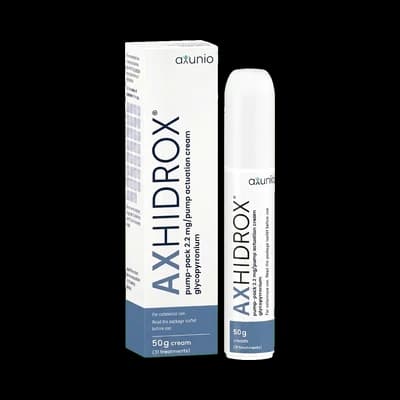
Axhidrox
- FREE secure consultation service
- Fast and effective treatment
Book a quick face-to-face video consultation with a certified prescribing pharmacist, nurse, or doctor. If approved, your Hyperhidrosis treatment will be prescribed* and delivered straight to your door with free next-day delivery†. No hidden fees. No delays. Just expert care.
* Includes Free Private Prescription & Consultation.
† Applies to UK only.
Start Your Treatment Today
Safe Prescribing
No need to visit a doctor or wait for an appointment. With our virtual consultation service, you can see a clinician online from the comfort of your home. Start your free assessment and get a treatment recommendation tailored to you. You only pay if medication is prescribed.
Hyperhidrosis (excessive sweating) is a common condition affecting millions of people around the world. Sweating more than the body needs to regulate temperature can significantly impact daily life, confidence, and wellbeing.
Hyperhidrosis is when you sweat excessively and unpredictably, often beyond what is needed to cool the body. It can affect the entire body or specific areas such as the hands, feet, armpits, or face, and can occur even when you are not hot or exercising.
Hyperhidrosis can be classified into two main types:
Primary Hyperhidrosis is thought to be related to overactivity of the nerves that stimulate sweat glands, and may have a genetic component. Secondary Hyperhidrosis is linked to conditions such as diabetes, menopause, thyroid disorders, infections, or the use of certain medications.
Diagnosis involves a medical review, an assessment of your sweating patterns, and an evaluation of any underlying conditions. Tests such as the starch-iodine test or thermoregulatory sweat test may be used to identify the affected areas and severity.
Several risk factors can increase your risk of developing Hyperhidrosis. These include:
Chronic Hyperhidrosis can lead to skin infections such as athlete’s foot or fungal nail infections. It is also strongly associated with anxiety, social withdrawal, depression, and a reduced quality of life, as sufferers may avoid social situations or physical contact due to embarrassment.
Prescription antiperspirants containing aluminium chloride are usually the first-line treatment and are applied directly to the affected areas. For those with severe primary axillary Hyperhidrosis, Axhidrox (glycopyrronium 2.2 mg/pump actuation cream) is a prescription-only topical treatment applied directly to the underarms. Axhidrox works by competitively blocking muscarinic acetylcholine receptors in the sweat glands, inhibiting the nerve signals that trigger perspiration. The recommended dose is two pump actuations per armpit, applied once daily in the evening for the first four weeks; from week five onwards, frequency can be reduced to twice weekly depending on response. Clinical studies showed Axhidrox produced approximately twice the sweat reduction of placebo after four weeks, with continued improvement in symptoms and quality of life over up to 72 weeks of use. Axhidrox is for adults only and is for use in the underarm area exclusively — it should not be applied to hands, feet, face, or other areas. Common side effects include dry mouth, dry eye, nasal dryness, application site reactions, and headache. It should be used with caution in patients with glaucoma, urinary retention, myasthenia gravis, or cardiovascular conditions. Other anticholinergic medications such as tricyclic antidepressants or antihistamines may increase the risk of anticholinergic side effects if used at the same time.
Other medical treatments include broader anticholinergic oral medications, which reduce the signals that trigger sweat glands, and should be taken as prescribed by a healthcare professional as they can cause side effects. Botulinum toxin (Botox) injections are also used for localised sweating, particularly in the armpits.
Good skincare routines and making lifestyle changes can help manage symptoms and reduce the impact of Hyperhidrosis on daily life:
Cognitive behavioural therapy (CBT) can help patients manage the anxiety and psychological distress associated with Hyperhidrosis. It aims to identify and modify thoughts and behaviours that worsen anxiety around sweating, and can significantly improve quality of life alongside medical treatment.
Deep breathing exercises, progressive muscle relaxation, and meditation can all help to calm the nervous system, reduce anxiety-related sweating triggers, and improve overall emotional wellbeing for those living with Hyperhidrosis.
Common causes of Hyperhidrosis in children and teenagers include hormonal changes during puberty and a genetic predisposition. It can cause significant distress and social anxiety in young people, making early diagnosis and treatment important.
As we get older, Hyperhidrosis may develop or worsen due to hormonal changes such as menopause, the onset of new medical conditions, or medications prescribed for other health issues.
Washing affected areas daily with an antibacterial soap and ensuring the skin is thoroughly dry before applying antiperspirant will help prevent skin infections and improve the effectiveness of topical treatments, including Axhidrox.
Regular exercise helps to manage body weight, reduce overall stress, and improve cardiovascular health — all of which can positively influence the severity of sweating. Low-intensity, low-heat activities such as swimming or yoga may be particularly beneficial.
Avoid spicy foods, caffeine, and alcohol, as these are common triggers that stimulate sweat glands. Staying well hydrated with water and eating a balanced diet can also help regulate body temperature more effectively.
Consult a healthcare provider if sweating is affecting your daily life, causing skin infections, or if it starts suddenly without a clear cause, as this may indicate an underlying condition requiring treatment. Prescription treatments such as aluminium chloride-based antiperspirants, Axhidrox, or anticholinergic medications can be prescribed following a consultation.
Dermatologists and specialist clinicians can offer a range of treatments for Hyperhidrosis when first-line options have not been effective, including Axhidrox, Botox injections, iontophoresis (a treatment using mild electrical currents), or in severe cases, surgical options such as sympathectomy.
Understanding the causes, symptoms, and treatments available for Hyperhidrosis is essential to managing the condition effectively. With the right support and access to modern prescription treatments such as Axhidrox, most people are able to significantly reduce symptoms and improve their quality of life.
Consultations, prescriptions, medication delivery, health monitoring – all in one place.

We are a broad skilled and passionate group of clinicians with experience of operating in regulated health systems in the United Kingdom & United States. Providing excellent care and advice is at the heart of everything we do.