


















Related articles
What are the risks to pregnant women who contract measles?
Pregnant women who contract measles are at an increased risk of experiencing severe complications, including pneumonia, preterm labor, and low birth weight. Measles infection during pregnancy can also result in congenital disabilities or fetal loss.
Who is at risk of measles?
Unvaccinated Individuals are at high risk of contracting the virus. This includes individuals who have not completed the recommended two doses of the measles, mumps, and rubella (MMR) vaccine.
International travelers who travel to areas where measles is more prevalent increase the risk of exposure to the virus. It is important for individuals planning international travel to ensure they are adequately vaccinated against measles to prevent infection and subsequent transmission.
Healthcare professionals and individuals working in childcare facilities are at an increased risk of contracting measles due to their potential exposure to infected individuals. These individuals should ensure they have received the appropriate vaccinations and follow strict infection control practices to minimize the risk of transmission.
What are the differences between measles and chickenpox?
While measles and chickenpox may share some similarities, there are several key differences between the two diseases:
- Causative Virus: Measles is caused by the measles virus, whereas chickenpox is caused by the varicella-zoster virus (VZV)
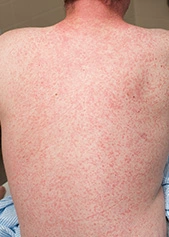
- Symptoms: Measles typically presents with a high fever, cough, runny nose, red eyes, Koplik’s spots, and a rash that starts on the face and spreads downward. Chickenpox usually presents with a high fever, loss of appetite, headache, and a rash that starts on the trunk and spreads to other parts of the body
- Complications: Measles can lead to complications such as pneumonia, encephalitis, and death, especially in young children and individuals with weakened immune systems. Chickenpox can also cause complications, including bacterial skin infections, pneumonia, and encephalitis, but they are less common
- Transmission: Measles is highly contagious and spreads easily through respiratory droplets. Chickenpox is also highly contagious and can spread through respiratory droplets, direct contact with fluid from blisters, or touching contaminated surfaces
- Vaccination: Both measles and chickenpox can be prevented through vaccination. The measles vaccine is typically given as part of the MMR vaccine, while the chickenpox vaccine is given separately or as part of the MMRV (measles-mumps-rubella-varicella) vaccine